Simultanoiusly, the world those frameworks were designed for looked different. Negotiations were more linear. Stakeholders were more clearly defined. Organizations were more contained, and deals were largely about closing transactions between identifiable parties. Today, that context has shifted fundamentally. Negotiations happen across complex ecosystems with multiple interdependencies. Stakeholders extend far beyond the table. The question is no longer only “how do we close this deal?” but increasingly “what relationships, systems, and conditions make sustainable agreements possible in the first place?“
In a world of finite resources and growing interdependence, that question is not abstract. When budgets are constrained, when natural resources are under pressure, when organizations compete for the same talent, capital, and attention, the way we negotiate determines not just who gets what, but whether value gets created at all. A model built only for dividing what exists is no longer sufficient. We need approaches that generate new possibilities.
From principled negotiation to Negotiation Intelligence (NQ®)
The Harvard model gave negotiators something essential: a principled alternative to positional bargaining. Roger Fisher, William Ury, and Bruce Patton, the founders of the Harvard Negotiation Project, introduced tools for creating value rather than just claiming it, for separating people from the problem, and for grounding agreements in objective criteria rather than pressure alone. These were not small insights. They shifted an entire field.
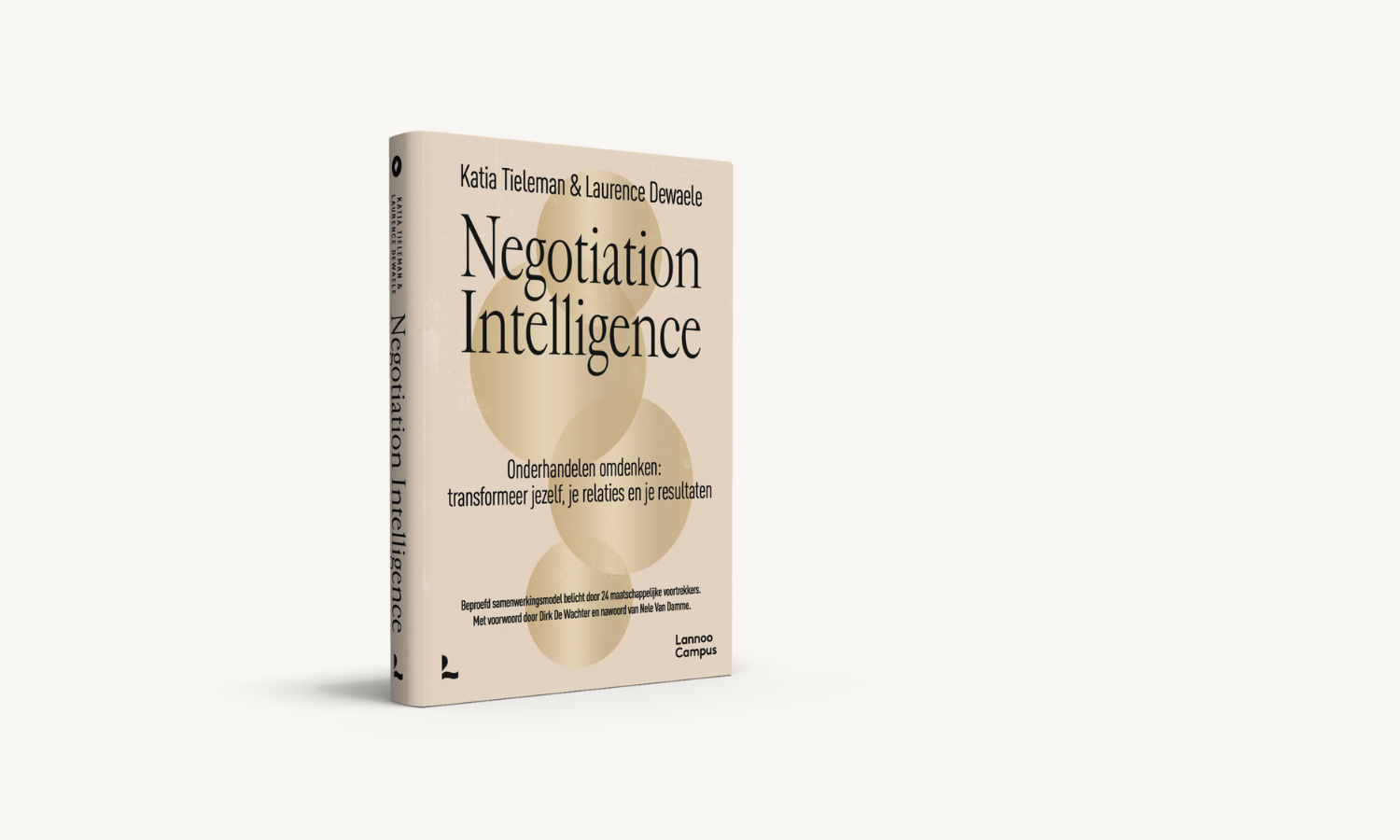
I am a firm believer and advocate for what Harvard built. As a fellow at the Program on Negotiation, I was shaped by it. But standing on that foundation, I kept asking: where do we go from here? Negotiation Intelligence (NQ®) is my answer to that question.
The NQ® model adds to that foundation in three important ways.
- First, it brings the negotiator back into the picture. Principled negotiation tells you what to do. Negotiation Intelligence (NQ®) asks who you are as a negotiator, and how your mindset shapes every move before you even open your mouth. This is not just about self-awareness. It is about building the habits that make skilled negotiation second nature so that under pressure, your best thinking shows up automatically, not accidentally.
- Second, it expands the map of interests. Rather than uncovering interests as fixed facts, NQ® invites you to map a full ecosystem, including the positions and motivations of parties not yet at the table, and to treat those interests as dynamic and interactive.
- Perhaps the most significant shift is in how value itself is defined. Where principled negotiation frames the work as problem solving, Negotiation Intelligence (NQ®) frames it as opportunity finding. The goal is not just to reach a win-win agreement. It is to create value beyond the deal itself, financial and non-financial, now and over time, and to build the kind of adaptive partnerships that make future negotiations better.
And then there is a fourth dimension entirely. The NQ® key of Shaping the game moves the work upstream. The most powerful negotiators are not just better at the table. They shape the context, the relationships, and the conditions before they ever sit down. This is where negotiation becomes a leadership skill. Leaders who negotiate well do not wait for the right moment, they create it. They understand that every conversation, every relationship, and every decision they make either opens or closes future possibilities. Negotiation, at this level, is not a transactional skill. It is how leaders shape the future.
We hear this more and more from clients. They come to us looking for someone to teach the Harvard approach but they sense that something is missing. What they are really asking for is a negotiator who stands with both feet firmly rooted in that tradition, yet whose thinking reaches well into the complexity of today. Someone who does not just explain the model, but makes it land in the actual behavior of their negotiators. Not knowledge transferred in a classroom. Habits built in the real world.
That is exactly the space NQ® was designed for.
If Harvard provides the basis of the operating system, NQ® defines and develops the qualities you need to drive it.
The negotiation before the negotiation
This matters more than most negotiators realize. Research published in the European Journal of Social Psychology (Zhang et al., 2025) found that negotiators consistently overlook the interests of parties who are absent from the table but directly affected by the outcome. Those who adopted what the researchers called an “interdependence mindset,” actively considering the broader ecosystem of stakeholders, achieved significantly more inclusive and integrative outcomes. In other words, the negotiators who thought beyond the room got better results for everyone in it.
The NQ® model builds exactly this capability. Across its four keys, unlocking fixed positions, unlocking hidden value, unlocking your safety kit, and shaping the game as the master key, it develops the mindset and skills needed to negotiate not just at the table, but across the full system that surrounds it.
A different question to carry into your next negotiation
The shift from the Harvard model to Negotiation Intelligence (NQ®) is not a shift in values. Both are grounded in the belief that negotiation can be principled, collaborative, and generative. The shift is in scope.
It is the difference between mastering a deal and understanding the game. Between uncovering interests and mapping a system. Between reaching agreement and building the conditions for lasting value.
The most useful question a negotiator can carry into any conversation is not “how do I win this?” It is: “what is actually at stake here, for everyone involved, and what kind of negotiator does this moment require me to be?“
That question does not replace technique. It gives technique its proper place.