Introduction
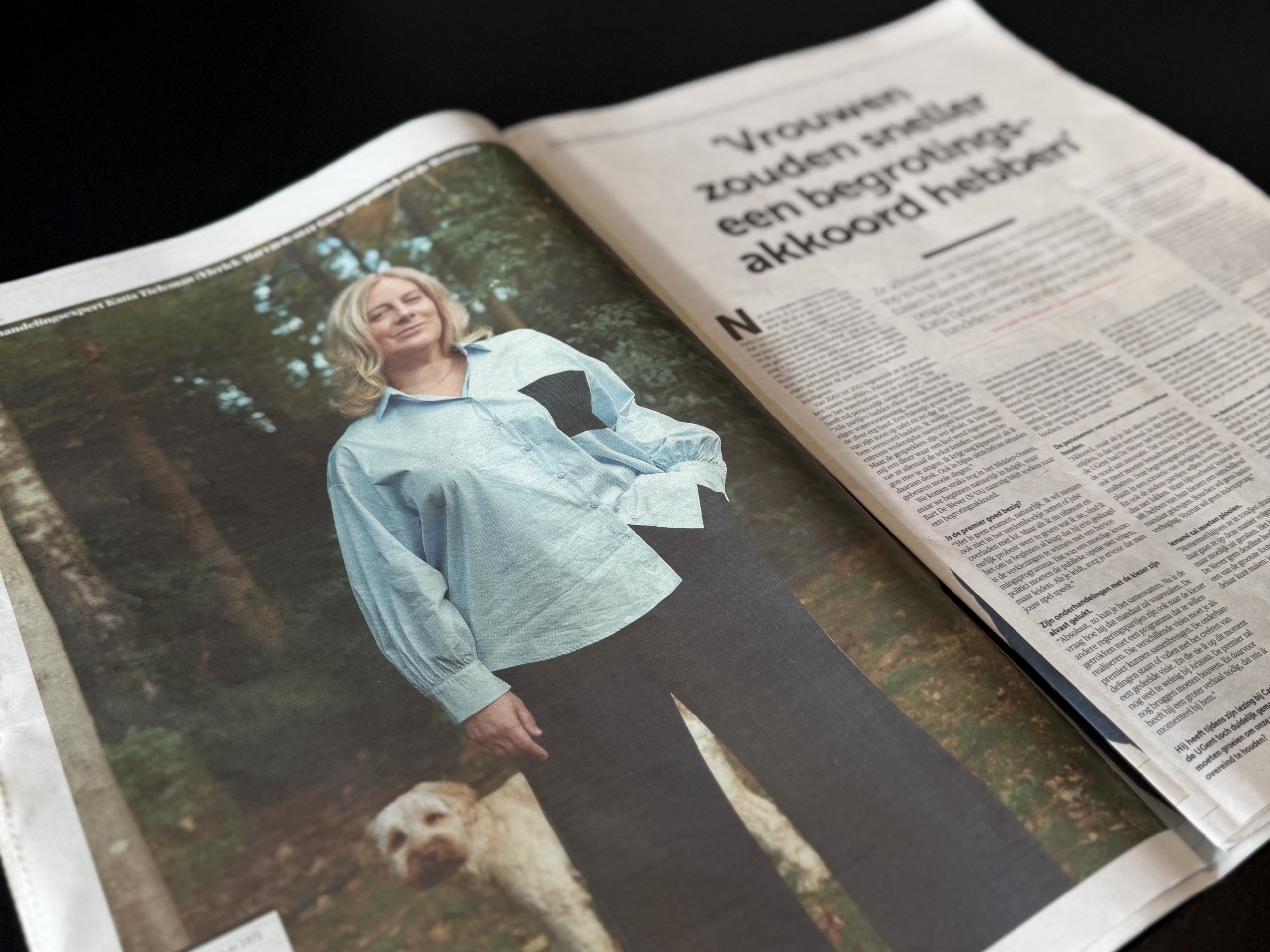
In the fall of 2025, Katia Tieleman was interviewed by journalist Joël De Ceulaer for De Morgen. In this in-depth conversation, they explored negotiation in all its forms: from geopolitical conflicts and federal budgets to corporate mergers, leadership, and even parenting.
The interview touches on a core question that is becoming increasingly urgent today: how do we reach lasting agreements in a world shaped by polarization, scarcity, and power dynamics?
Negotiation is everywhere
In the article, Katia Tieleman emphasizes that negotiation is not an exceptional event, but a constant. In politics, organizations, and daily life, people are continuously negotiating over direction, resources, power, and collaboration.
That reality calls for a different kind of leadership, she argues. Not authoritarian or reactive, but reflective. Not focused on winning, but on creating shared solutions that stand the test of time.
Power moves fast, but breaks a lot
A key tension explored in the interview is the one between power and buy-in. In times of crisis, leaders often reach for pressure, escalation, and speed. That can produce results, but it undermines trust and collaboration over the long term.
Lasting agreements require something different: the ability to connect interests, hold space for complexity, and explicitly account for the human dimension in the process.
The way Ursula von der Leyen negotiated the trade tariffs was quite effective. She was calm, warm, radiated confidence, and did not engage with the escalation.
Katia Tieleman
Geopolitics, leadership, and human dignity
The conversation also explores international negotiations, where intimidation, unpredictability, and displays of power are becoming increasingly visible. Katia Tieleman advocates for calm, self-control, and separating the person from the problem.
Respect and trust, she argues, are not “soft” themes but hard prerequisites for any form of collaboration, whether between nations, organizations, or individuals.
From world conflicts to the kitchen table
What stands out is how the insights from the interview extend well beyond politics or geopolitics. The same principles apply in organizations and in families. Those who end up in a power struggle ultimately lose, even when they formally “win.”
Negotiation requires curiosity, timing, and the ability to keep emotions from making the decisions. That applies equally to CEOs, ministers, parents, and leaders.
Why this interview matters
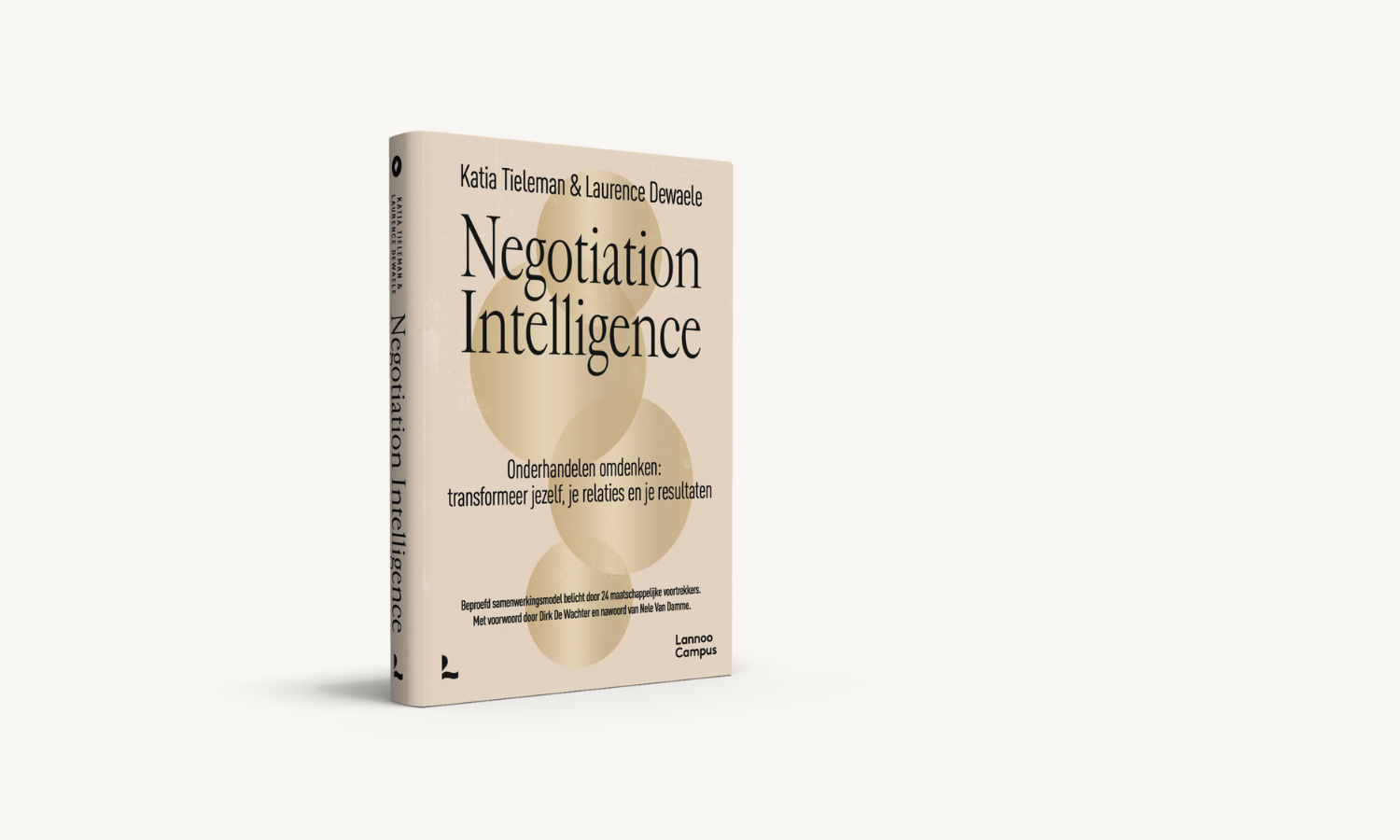
The conversation in De Morgen makes a compelling case for why Negotiation Intelligence® (NQ®) is a crucial skill today. In a world where classic compromise no longer suffices, there is a need for a model built on shared value, trust, and long-term relationships.
Not negotiating faster, but better. Not harder, but wiser.
Source
This article is based on and inspired by the interview
“Expert Katia Tieleman over de kunst van het onderhandelen”
Joël De Ceulaer, De Morgen, October 31, 2025.