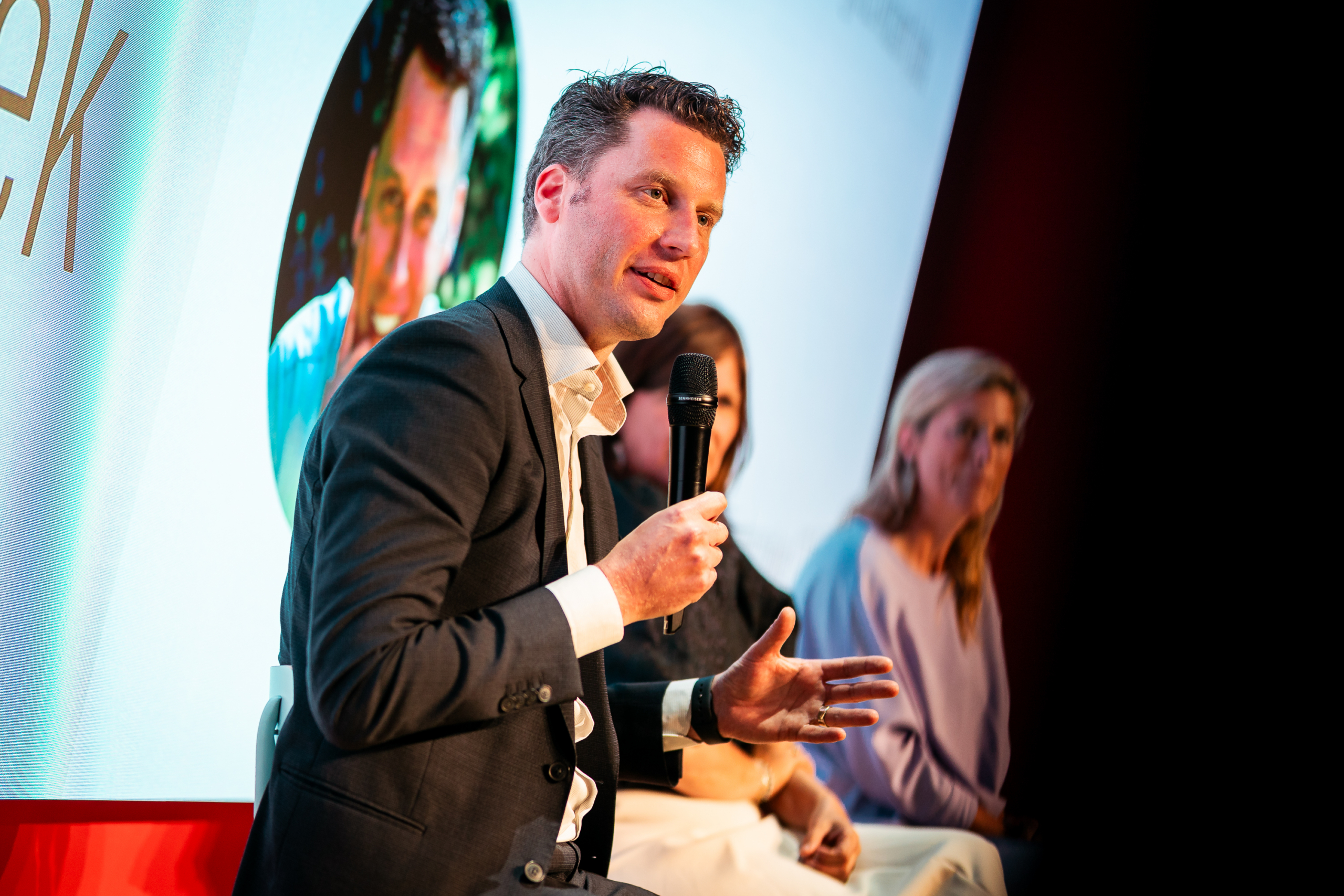
Nele Van Damme is co-CEO of Upgrade Estate, a company that develops sustainable housing for students, young professionals, and businesses. She embodies the thinking behind the New Negotiation Narrative.
As an entrepreneur, she negotiates daily with cities, neighborhoods, partners, and users, often in situations where interests collide and trust does not come naturally. Yet that is precisely where she shows how things can be done differently.
Nele is an ambassador of the New Negotiation Narrative.
What was the most surprising negotiation moment for you in 2025, and why?
Without a doubt, it was a neighborhood information session around a new project. Based on previous experiences, we had prepared for critical questions, concerns, and possible resistance. But the response from local residents was remarkably positive.
For the first time in years, there was not only understanding, but also genuine interest and even enthusiasm. People contributed constructively, asked substantive questions, and saw opportunities rather than problems.
That open attitude completely changed the dynamic. The conversation felt less like a classic negotiation and more like a collaboration.
For me, this confirmed how powerful transparency, clear communication, and early stakeholder engagement can be. Investing in dialogue pays off, even in contexts where you have historically encountered resistance.
Which conflict or complex collaboration taught you the most in 2025?
It was a process in which a persistent disagreement remained unresolved for a long time. Positions were stuck, and that began to weigh on the collaboration.
The breakthrough only came when we deliberately stepped back from short-term thinking and shifted the conversation toward the long term.
By focusing not on positions but on underlying interests, space opened up to think in alternatives and options. Instead of dividing the existing pie, we managed to make it bigger.
That allowed both parties to feel heard and to find themselves in the final solution. The process taught me how important patience, creativity, and a focus on lasting value are in complex collaborations.
Which negotiation trend from 2025 do you think we are underestimating?
The growing influence of a more confrontational and unpredictable negotiation style, inspired by figures such as Donald Trump.
That mindset, strongly focused on power, framing, and maximum positioning, is increasingly making its way into Europe. The result is that negotiations are becoming less predictable. Positions polarize more quickly, stances harden, and conversations can suddenly go in any direction.
This asks of negotiators not only greater flexibility, but also strategic awareness and emotional resilience. Classic assumptions about reasonableness and shared ground rules no longer always hold.
What do you see as the greatest challenge for negotiators in 2026?
The greatest challenge will be maintaining a values-driven negotiation mindset in a context increasingly shaped by confrontational and positional styles.
At the same time, that also calls for self-reflection. It is important not to hold blindly to familiar reflexes.
Successful negotiation requires flexibility and self-awareness, and the ability to keep thinking in options that strengthen both the outcome and the relationship over the long term.
Which skill or mindset do you see as the key lever for better negotiation in 2026?
For me, it is clear: negotiating from a place of value creation. The training program Negotiating with Value Creation has played an important role in that. Not because it focuses on techniques, but because it shifts your mindset, away from positional thinking and toward developing options and sustainable solutions.
In a context where negotiations are becoming increasingly complex and unpredictable, that framework offers real grounding.
If 2026 were a negotiating table, who would you absolutely want at it?
Someone who thinks in terms of connection and brings calm to complex conversations. Someone who is strategically sharp, yet attentive to nuance, interests, and relationships. That kind of presence makes all the difference today.
Final thoughts
What moves me in this conversation with Nele is not one statement or one example. It is the consistency. The choice to, even when things get complex, not fall back on quick fixes or hard positions. But to keep searching for what is possible. Together.
That is what the New Negotiation Narrative stands for. Not as a model to follow, but as a way of seeing, listening, and acting. At every negotiating table. In every context.
If we take one thing into 2026, let it be this: negotiation is not a matter of winning or giving in, but of giving direction.
The New Negotiation Narrative Manifesto is an invitation to enter that conversation with intention.
You can read and sign the Manifesto here.
Everyone who wants to make a difference is welcome at the table.
With warmth,
Katia