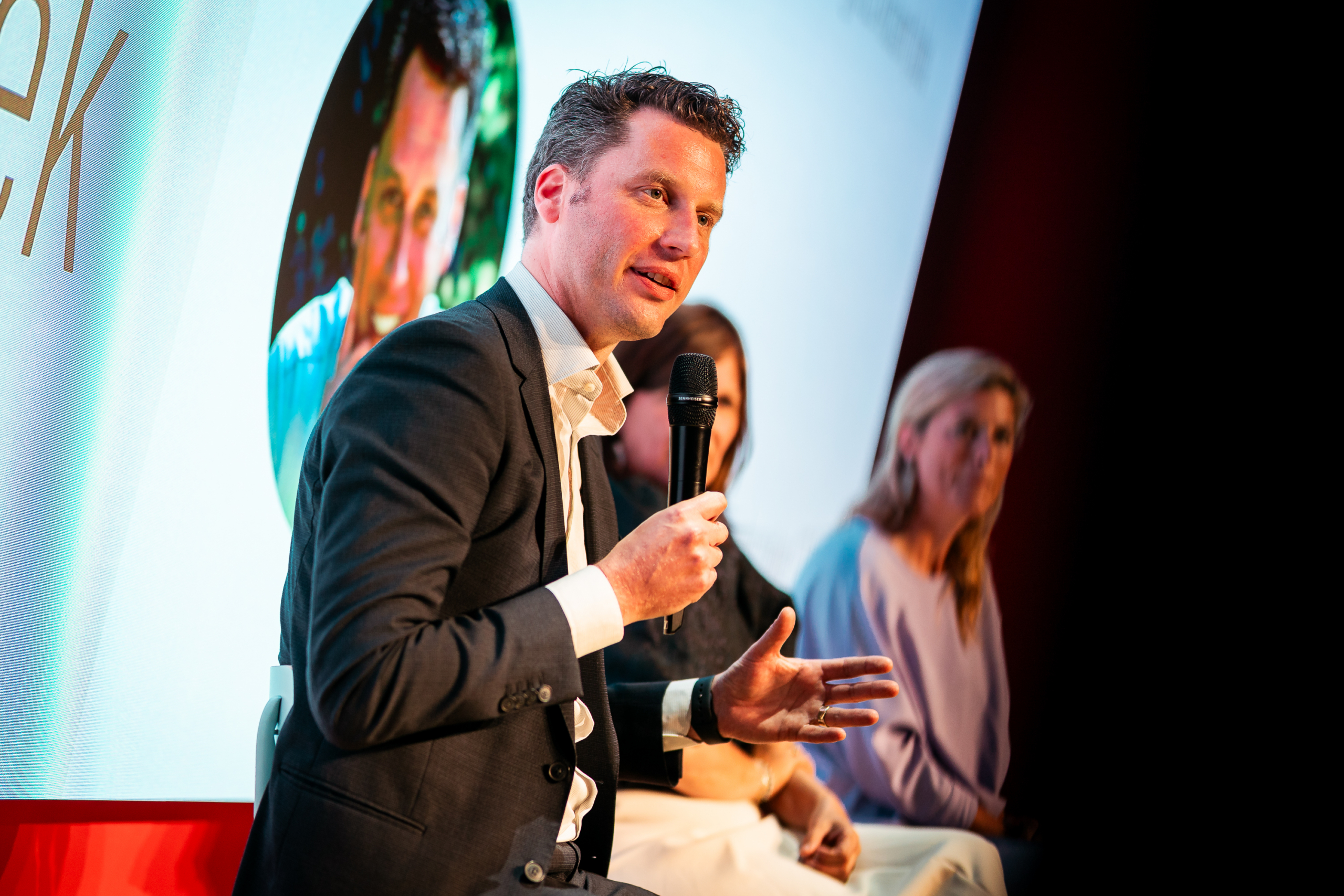
Jochanan Eynikel (born 1981) is a Belgian philosopher and ethicist, affiliated with Etion as a corporate philosopher. He inspires organizations with insights on ethics and values-driven entrepreneurship. His focus is on the ethical challenges of technology, economics, and leadership, with particular attention to human dignity, meaning, and moral decision-making in organizations.
Jochanan Eynikel is an ambassador of the New Negotiation Narrative.
Looking back on 2025
When he reflects on 2025, philosopher and corporate ethicist Jochanan Eynikel does not see a series of isolated negotiations, but a continuous chain of them. Trade tariffs, budgets, political formations, international conflicts, and fragile peace efforts: the negotiating table was everywhere. What stands out is not only the volume, but above all the nature of those negotiations.
According to Jochanan Eynikel, many of these processes were characterized by the dominant position of a single player. Negotiation then quickly shifts from dialogue to deal-making, from a shared search for solutions to zero-sum thinking and opportunism. More “deal” than “negotiation.”
That is precisely why the New Negotiation Manifesto is so relevant, according to Eynikel. Not as a new set of techniques, but as a call for a fundamental shift in mindset.
Value creation over power
Where classic negotiations often depart from scarcity, opposition, and win-lose thinking, Eynikel advocates for an approach centered on multiple forms of value creation. Not either-or, but both-and. Not polarizing, but connecting. Not forcing, but exploring.
That approach asks something different of negotiators. Less focus on the short term or on being right, more attention to relationships, context, and the broader impact of decisions. Value creation then becomes not a tactic, but a guiding principle.
In organizations, Eynikel sees every day how this difference in mindset plays out. Not only in contract negotiations, but also in how companies relate to employees, partners, and their role in society. Some organizations remain stuck in guarding their conditions. Others actively look for openings.
Stories of hope as a counterforce
For 2026, Eynikel sees an important mission for the community around the Manifesto: making hopeful examples visible. Stories that show negotiation can be done differently. That even in a complex, rapidly changing world, there is room for collaboration, reciprocity, and shared progress.
Not by denying reality, but by demonstrating that power and humanity, interests and values, results and relationships are not necessarily opposites.
The New Negotiation Narrative invites us to rethink what negotiation means today, and what it can become tomorrow. At the negotiating tables that shape our organizations, societies, and world.
You can read and sign the Manifesto here.