Why the price-or-relationship dilemma is a false choice
Imagine the CEO of a mid-sized engineering firm. For twelve years, her company has worked with the same industrial client. The relationship is strong: there are shared projects, mutual trust, and people on both sides who know each other by name. Then the contract comes up for renewal, and the client’s procurement director opens with one sentence: “We need an 8% price reduction, or we will have to go to tender.”
We hear this tension from many leaders. Push back on the terms, and you risk the relationship. Protect the relationship, and you give away value. It feels as if you have to choose.
That choice only exists if there is one thing on the table. When the only variable is price, every euro you gain is a euro they lose. That is the zero-sum game, and inside it, the relationship always pays.
The way out is not to be tougher or softer. It is to be more inventive.
Stop splitting, start adding
Most negotiations are narrower than they need to be. Two parties arrive with a proposal, a number and a counter-number, and spend their energy moving toward the middle.
In the NQ® model, the Inventor is one of four inner figures every negotiator carries. The Inventor looks at a negotiation through the lens of possibilities, and asks a different question: what else could be on the table? Think of timing, scope, volume, contract duration, payment terms, risk-sharing, service levels, exclusivity, access to expertise, or future collaboration. Each new variable is a new place where value can be created instead of divided.
Look for differences, not only common ground
We often assume that agreement comes from finding what we have in common. Common ground matters. But much of the value in a negotiation comes from differences.
When one party cares a great deal about speed and the other about certainty, they can trade. When one side values a longer contract and the other values flexibility on price, both can gain. When two parties have different expectations about the future, they can build an agreement that adapts to what actually happens, rather than fighting over whose forecast is right.
Differences in priorities, in risk appetite and in time horizon are not obstacles. They are the raw material of value creation.
Ask why before you ask how much
Positions tell you what someone wants. Interests tell you why. And the why is where invention begins.
A client asking for a 10% discount may be protecting a budget line, responding to internal pressure, or trying to reduce risk on an unfamiliar project. Each of those interests opens a different set of solutions, and very few of them require you to simply lower your price.
Some questions that open the space: What would make this a success for you a year from now? What is the concern behind this request? What matters most to you, and what matters less?
Put several offers on the table
One practical habit makes a remarkable difference: instead of presenting a single proposal, present two or three that are equally acceptable to you but built differently. One might offer a lower price with a longer commitment. Another, a broader scope with a phased payment.
The other side’s reaction tells you what they truly value. And it turns the conversation from “take it or leave it” into “which of these fits you best,” which is a very different starting point for a relationship.
What this looks like in practice
Back to our CEO. Her first reflex was to calculate how far she could go: 3%, maybe 4%. Instead, she asked a question: what is behind the 8%?
The answer changed the conversation. The client’s CFO had promised the board lower operating costs this year. The client was also planning to expand into two new sites, but had no certainty yet about timing. The 8% was not really about price. It was about predictability in a year of pressure.
That opened a different set of options. She put three proposals on the table. The first was a 3% reduction with a three-year commitment. The second kept the current price but included the engineering work for the new sites at a fixed rate. The third was a lower base price combined with a shared savings model on energy efficiency.
The procurement director chose the second option, and the conversation moved from “how much can you give?” to “how do we plan the next three years together?” The relationship came out stronger, and so did the margin.
Nothing in the deal was invented out of thin air. The value was there all along, hidden behind a single number.
The inventor and the game architect
Value invention is the first step out of the zero-sum game. It keeps the relationship intact and grows what both sides take home.
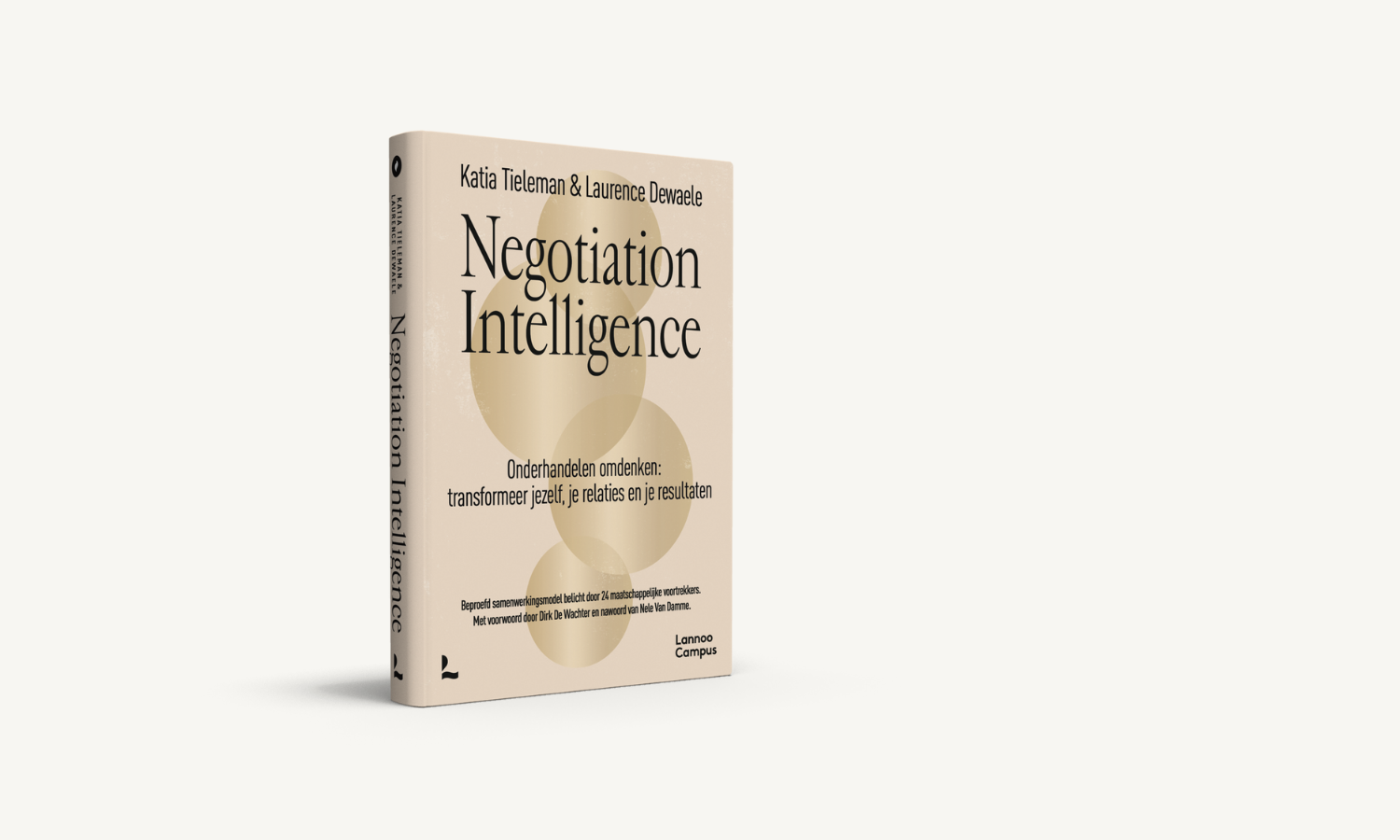
But there is a level beyond this. The inventor is creative within the deal. The game architect, another of these inner figures, questions the deal itself: why we are negotiating it this way, who defined the problem, and whether the criteria make sense at all. These two inner figures are part of the NQ® model, which I developed and describe in my book Negotiation Intelligence, Onderhandelen Omdenken. You can read more about the game architect in Who decided this was a zero-sum game?
Both start from the same conviction. You do not have to choose between the relationship and the result. You can build both.